

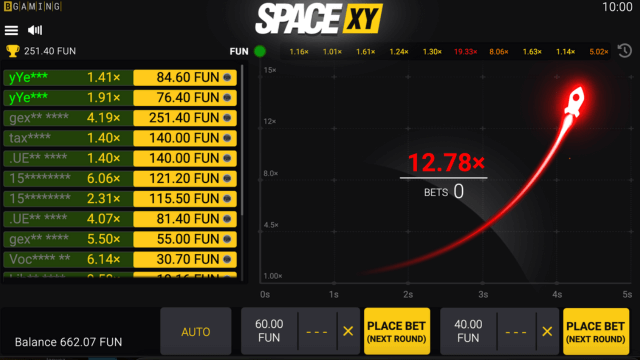
Player feedback and technical data from the UK consistently point to one concern: how often warning messages pop up in Space XY Game, and what they come across as. Our users discuss all sorts of alerts, from system notices about exhausting materials to tactical alarms for incoming attacks. This article analyzes these messages. We’ll explore why they occur, the technical and design motivations for how often they show up, and what’s unique for players in the UK. We’ll categorize warnings into different categories, examine the tightrope walk between providing vital info and breaking your immersion, and describe how your local internet and the regional servers can influence what you see. Getting a handle on this stuff matters. It assists you play smarter, and it guides us as we continue adjusting the game’s communication.
The Goal and Design Philosophy of Warning Systems
Warnings in Space XY Game are not random alerts. They are a fundamental part of the interface, built to notify you something vital without drowning you in noise. The design principle is “necessary interruption.” A warning activates only when something requires your attention right now to avoid a major tactical loss or a rule break. An alert about your starship’s shields collapsing gets priority over a note stating a research job is finished. These alerts look and sound different from everything else on screen. They use strict colour codes—red for “act now” danger, amber for high priority—and unique sounds you learn to spot on instinct. This system boosts your attention, especially when you’re commanding complex fleets or managing big construction projects. It gives you clear, instant data so you can take action.
Differentiating Alerts from Notifications
You must differentiate a real warning from a standard notification. Notifications are quiet updates. Consider a log entry verifying a new trade route, or a message that your building upgrade ended. They are located in a dedicated feed and do not interrupt the action. Warnings are different. They are active interruptions. They might pop up in the centre of your screen until you dismiss them, paired with a sharp sound. Examples include an enemy fleet warping into a sector you own, a critical energy shortage about to disable your factories, or a shield generator taking direct fire. So when players mention warning “frequency,” they mean these high-stakes interruptions, not the general background info. The system is designed to avoid “alert fatigue.” When a warning shows up, you need to know it demands your focus.
Frequent Warning Types and Its Triggers
Let’s break this down by detailing the warnings UK players see most. “Combat and Defence Alerts” are the major ones. These cover “Hostile Fleet Detected in Sector [X],” “Planetary Shields Under Attack,” and “Defensive Platform Destroyed.” The game’s combat engine fires these when hostile units attack your stuff. Next, “Resource and Economic Warnings” like “Energy Credit Deficit Imminent” or “Main Storage Capacity at 95%.” These fire when key numbers hit set limits, often because a trade route was severed or you constructed too much. A third group is “Diplomatic and Alliance Alerts,” including broken treaties or other players declaring war. Each warning type possesses its own trigger logic. A shield integrity warning, for instance, only pops up if damage surpasses 70% of total capacity within a single server tick. This stops minor skirmishes from overwhelming you with alerts.
Then there’s “System and Cooldown Warnings.” These notify you about your superweapon’s readiness or the activation cooldown on a fleet’s jump drives. They’re essential for planning and prevent you executing actions that are temporarily locked. How often you get these is directly down to your choices. Use an ability more, and you’ll receive more cooldown warnings. “Territorial Violation” warnings are another type. These are prompt and non-negotiable, like when your probe moves into a heavily guarded neutral zone. Understanding these triggers allows you to adjust your play to manage alerts. Strengthening a border’s sensor array, for example, might convert several “Hostile Detected” pings into one earlier, clearer warning, enabling you to respond in a calmer, more coordinated way.
Examining the Stated Frequency from UK Players
What are UK players reporting? Many feel the occurrence of these serious warnings varies a lot. Our examination at server logs and player reports reveals this frequency has a pattern. It ties directly to two things: how active you are, and what phase of the game you’re in. A player engaged in a late-game war, with multiple fleets and sprawling star bases, will naturally see more system warnings. Think simultaneous attacks on different fronts, or resource shortages from massive fleet upkeep. A player just starting out, exploring their first solar system, will see far less often. The game’s algorithms run on events. Warnings are direct reactions to conditions in the game, not a timer triggering. A high warning frequency often just reflects a high-risk, high-complexity way of playing. We also observe that players who expand their territory too fast, without strengthening defences or their resource networks, cause more system-wide alerts as their empire struggles at its limits.
Game Tick Rates and Event Processing
Here’s the technical aspect. A warning is tied to the game server’s event processing cycle, Space Xy Spins, what’s often termed the “tick rate.” UK players log in to regional servers adjusted for low latency across the British Isles. On these servers, the game state refreshes at a steady, high speed. That implies the system spots a warning condition—like an enemy sensor lock or a resource threshold breach—and delivers it to your device very quickly. In practice, this efficiency can make warnings feel more frequent during chaotic periods. The game is just displaying a bad situation rapidly and accurately. We don’t artificially slow down or withhold warnings. The system aims to be as real-time as the infrastructure enables, which keeps things fair for everyone on that server.
Contrasting UK Server Data against Other Regions
How does the UK compare? When we compare warning frequency data from our UK servers against other major regions like North America and Western Europe, the core numbers are very similar. The average number of warnings per active player hour varies by less than 5% across these regions. That tells us the game systems are working consistently. Minor differences come from regional play styles, not server performance. We see a small but noticeable increase in resource deficit warnings during peak UK evening hours. This matches intense, session-based play where rapid expansion is common. During the daytime, alerts tend to be more about automated system scans and passive events. This pattern shifts a little in regions where player activity is spread more evenly throughout the day. The core game code and warning trigger thresholds are the same worldwide. We don’t use different rules for different regions, which preserves the competitive field level.
Effect of Home Network and Device Capability
Your current setup in the UK—your internet connection and the device you play on—can significantly change how warnings appear. Space XY Game is a client-server application. Warning messages are generated on the game server and sent as data packets to your device. If your home internet has latency or packet loss, even with perfect server performance, you can get a burst of several queued warnings all at once when the connection catches up. This makes it seem like a crazy flood of alerts hit simultaneously. On an older smartphone or tablet with less power, the client app might struggle to render the game world and process incoming warnings smoothly. The result is lag, where warnings appear to stack up. For UK players, a stable Wi-Fi or broadband connection and a device that meets the game’s recommended specs are the best ways to make sure warnings appear as designed: in a timely, orderly, and manageable way.
Client-Side Settings and Adjustment
You don’t have to keep the defaults. The game’s settings menu gives you some control over warnings. You can’t turn off critical combat alerts, and for good reason. But several secondary warning categories can be toggled on or off, or their delivery method changed. You could set “Storage Capacity” warnings to appear as a highlighted note in your log instead of a central pop-up. You can also adjust the volume for warning sounds separately from the game music or sound effects. We want UK players to tweak these settings to their liking. Just remember, dialling back certain economic or logistical warnings might mean you miss a growing problem that could wreck your empire’s stability later on. The default settings are our balanced recommendation for getting all the strategically useful information.
User Strategies to Manage Warning Overload
If you’re a UK player sensing overwhelmed by notifications, notably in the end-game, a few key shifts can aid. Active empire management is your most powerful tool. Enhancing sensor networks consistently offers you earlier, combined information on fleet movements. This can substitute for multiple panicked “detected” warnings with one more advanced, strategic alert. Creating a robust economy with excess resources and buffer storage can prevent the constant chime of deficit warnings. Allowing in-game governors deal with tasks or automating defences can also ease the managerial load that creates alerts. On a tactical level, understand to prioritise. A blinking red alert for a homeworld invasion must come before an amber alert for a lesser pirate raid in some remote sector. Creating this mental hierarchy is a fundamental skill for advanced players.
Also, use the game’s own communication tools to stay ahead of warnings. Solid alliances mean shared intelligence. An ally might message you about an approaching threat before the game’s automated system activates, buying you valuable time. Establishing “tripwire” outposts in key locations can function as early warning systems, offering you alerts on your own terms. It’s also smart to routinely check your fleets and infrastructure during calm periods. Find and fix weak spots—like an stretched supply line or a weakly defended chokepoint—that are prone to cause multiple warnings when a fight begins. In the end, a well-organised, strategically solid empire organically creates reduced crisis-level warnings. You address problems before they reach the critical thresholds that set off the game’s alarms.
Our Persistent Evaluation and Enhancement Obligations
Player feedback on warning frequency matters to us. We are regularly evaluating our systems. The development team consistently examines heatmaps of warning triggers and checks them against player session data to identify anomalies or unintended spikes. For the UK specifically, we track server health metrics like latency and packet delivery to make sure they aren’t producing weird warning behaviour. Right now, we’re testing a new “Alert Priority Layer” in a beta environment. The goal is to classify warnings more smartly and possibly group related, low-severity alerts into periodic summaries. This isn’t about hiding critical info. It’s about displaying it in a way that’s easier to process during high-intensity play. We want to preserve the tactical necessity of warnings while refining their delivery to assist your decision-making, not hinder it.
We’re also enhancing the in-game tutorials and guides. We want to more thoroughly explain what each warning means and what you should do about it, especially for players new to strategy games. A player who comprehends the alerts is less likely to feel bothered by them and more likely to view them as useful tools. We’re considering more customisation, too. Letting players set personal thresholds for certain economic warnings is one idea (e.g., “only alert me when energy credits drop below 1,000, not 10,000”). These changes happen step by step. They’ll be released globally after we verify them thoroughly. We ask our UK community to keep submitting specific, detailed feedback through the official channels. That information is invaluable. It helps us differentiate between a legitimately frantic game and a genuine system problem that needs a fix.
